Tuning — File Service
Upload the original file and vehicle details for digital processing.
Order file service
Unlock the hidden power of your engine with professional ECU calibration, stronger torque and OEM-level safety principles.
Stage 1 ECU tuning is the most popular and balanced level of performance calibration. It improves the original engine software while keeping the vehicle mechanically stock. No upgraded turbocharger, injectors, exhaust system or internal engine modifications are normally required.
Modern engines leave the factory with significant performance reserves. Manufacturers must create software that works reliably across many countries, climates, fuel qualities and driving habits. Because of that, factory calibration often prioritizes universal compatibility instead of the strongest possible response from the engine.
By refining selected ECU maps such as boost control, torque management, throttle response, fuel delivery and ignition timing, Stage 1 tuning allows the engine to make better use of its existing hardware. The result is stronger acceleration, improved mid-range torque and a more dynamic driving feel while maintaining everyday usability.
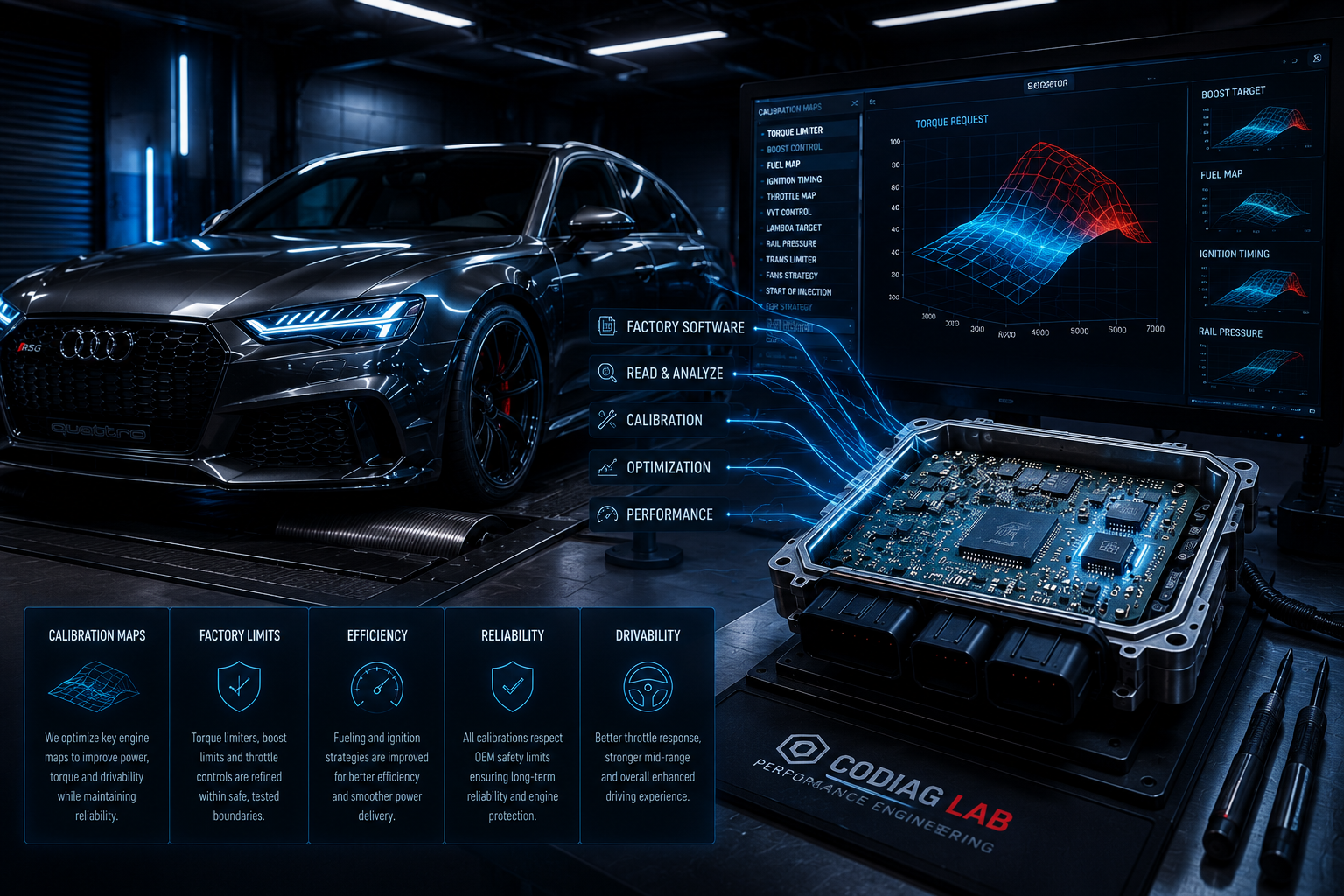
Factory software is designed around compromise. Stage 1 calibration is developed to improve power delivery, torque response and everyday drivability while respecting the mechanical limits of the vehicle.
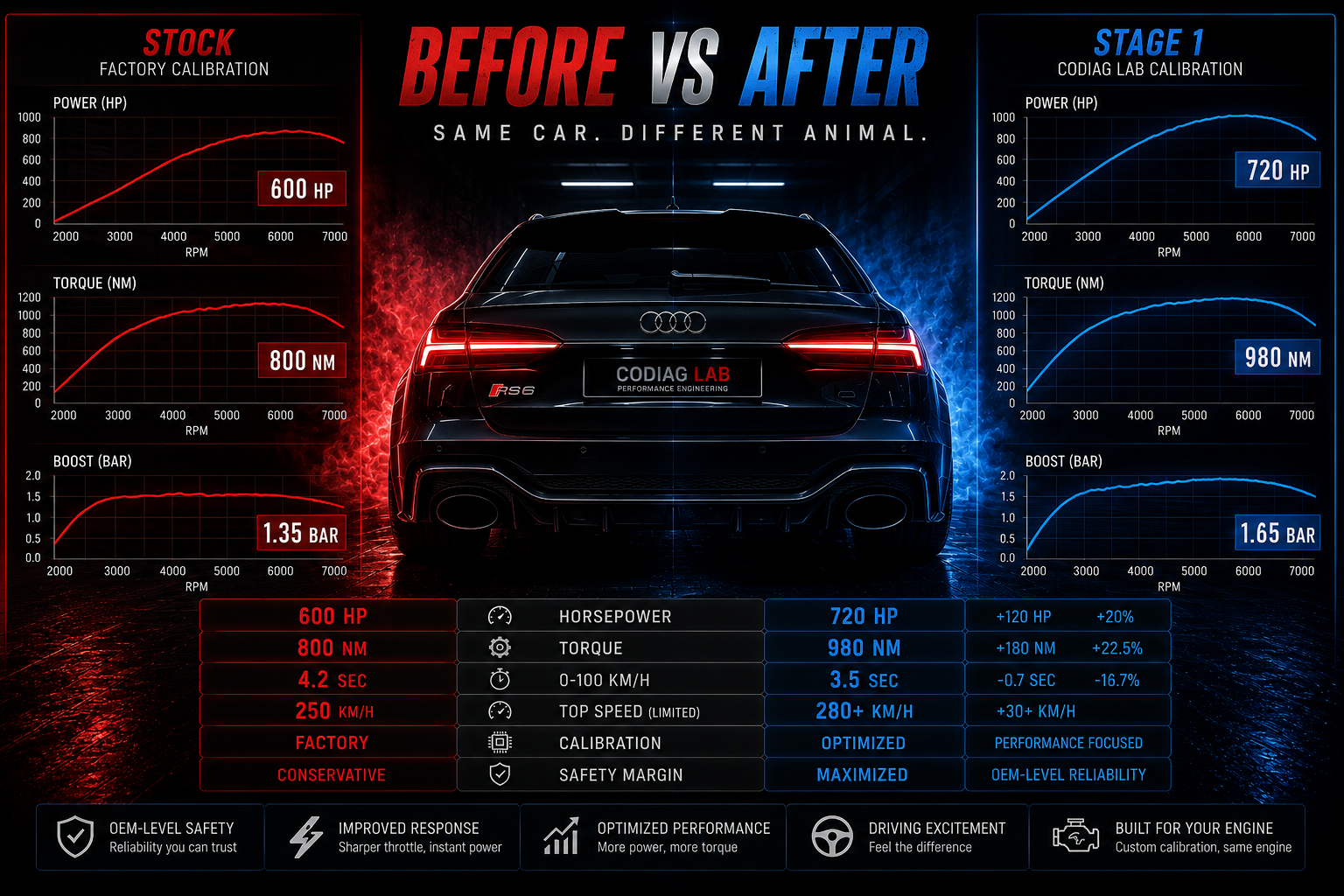
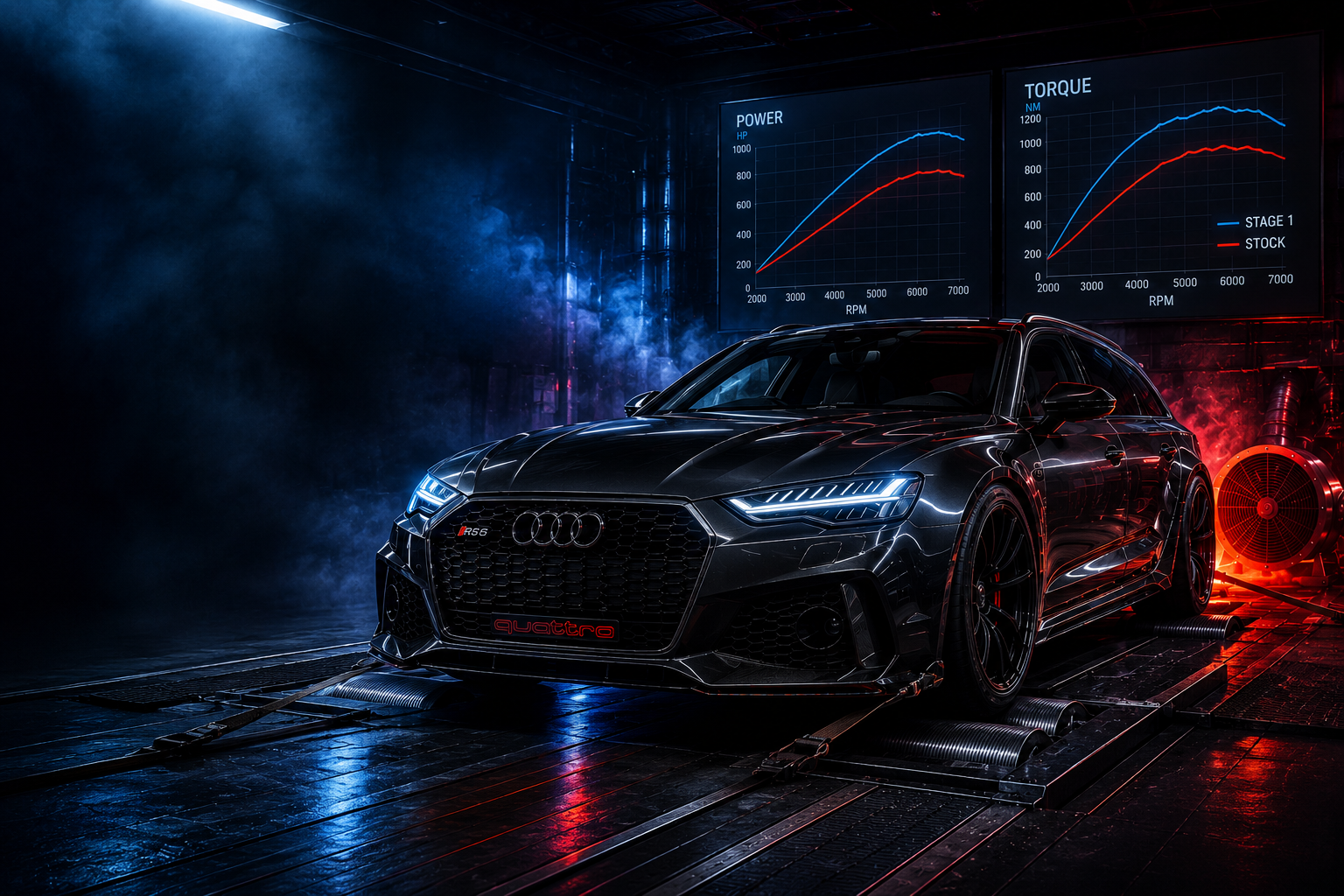
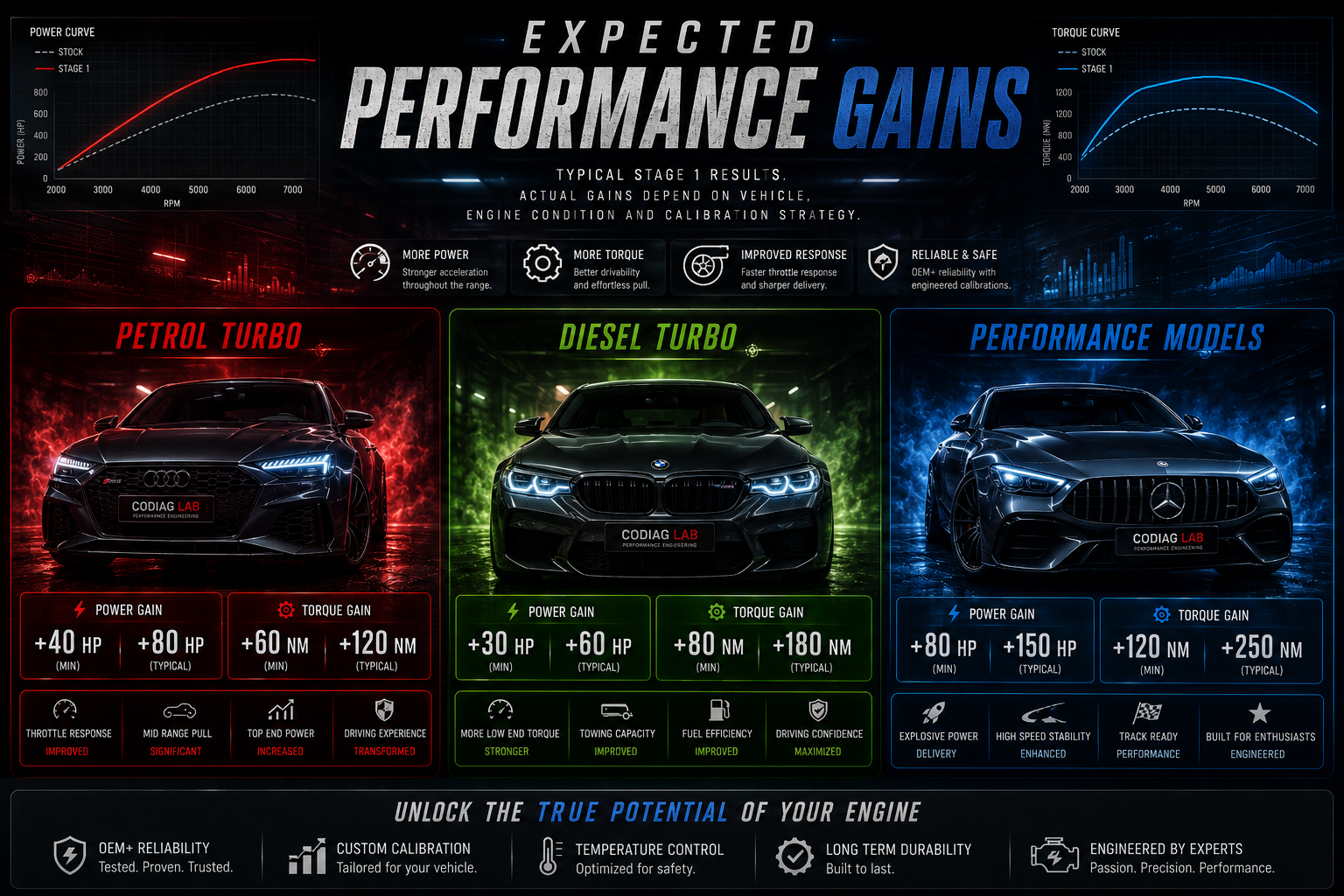
Professional tuning should be based on data, not guesswork. Power and torque curves show how the engine behaves across the full RPM range, not only at one peak number. The most noticeable improvement after Stage 1 is often stronger torque in the mid-range, where the vehicle spends most of its time during real driving.
Actual results depend on engine type, turbocharger condition, fuel quality, software version, mileage and overall mechanical health. A healthy turbo diesel or turbo petrol engine can often gain a significant improvement in torque and response without needing hardware changes.
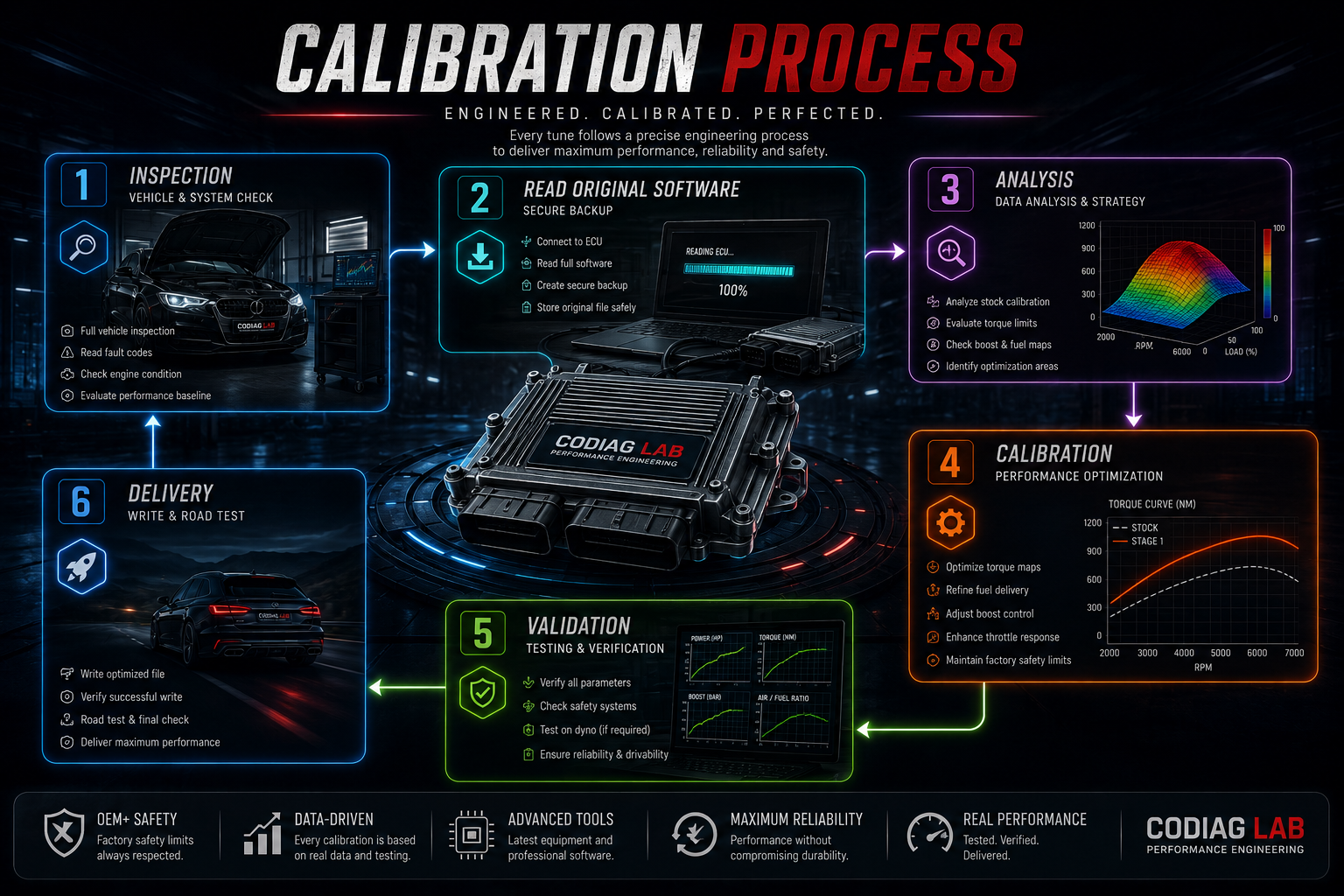
A professional Stage 1 tune is not a random file. It is a structured workflow that starts with diagnostics and original data backup, then moves through analysis, calibration and final validation.
Stage 1 tuning is suitable for a wide range of modern European petrol and diesel vehicles. The calibration strategy depends on the exact engine, ECU type, transmission, fuel quality and vehicle condition.

The first question many customers ask is simple: will Stage 1 damage the engine? The honest answer depends on the quality of the calibration and the condition of the vehicle. A professional tune should never be developed by simply pushing every limit higher.
Reliable performance comes from understanding temperature limits, boost control, fuel delivery, torque requests and drivetrain capability. OEM safety functions should remain part of the strategy, especially on vehicles used every day, on long trips or under heavy load.
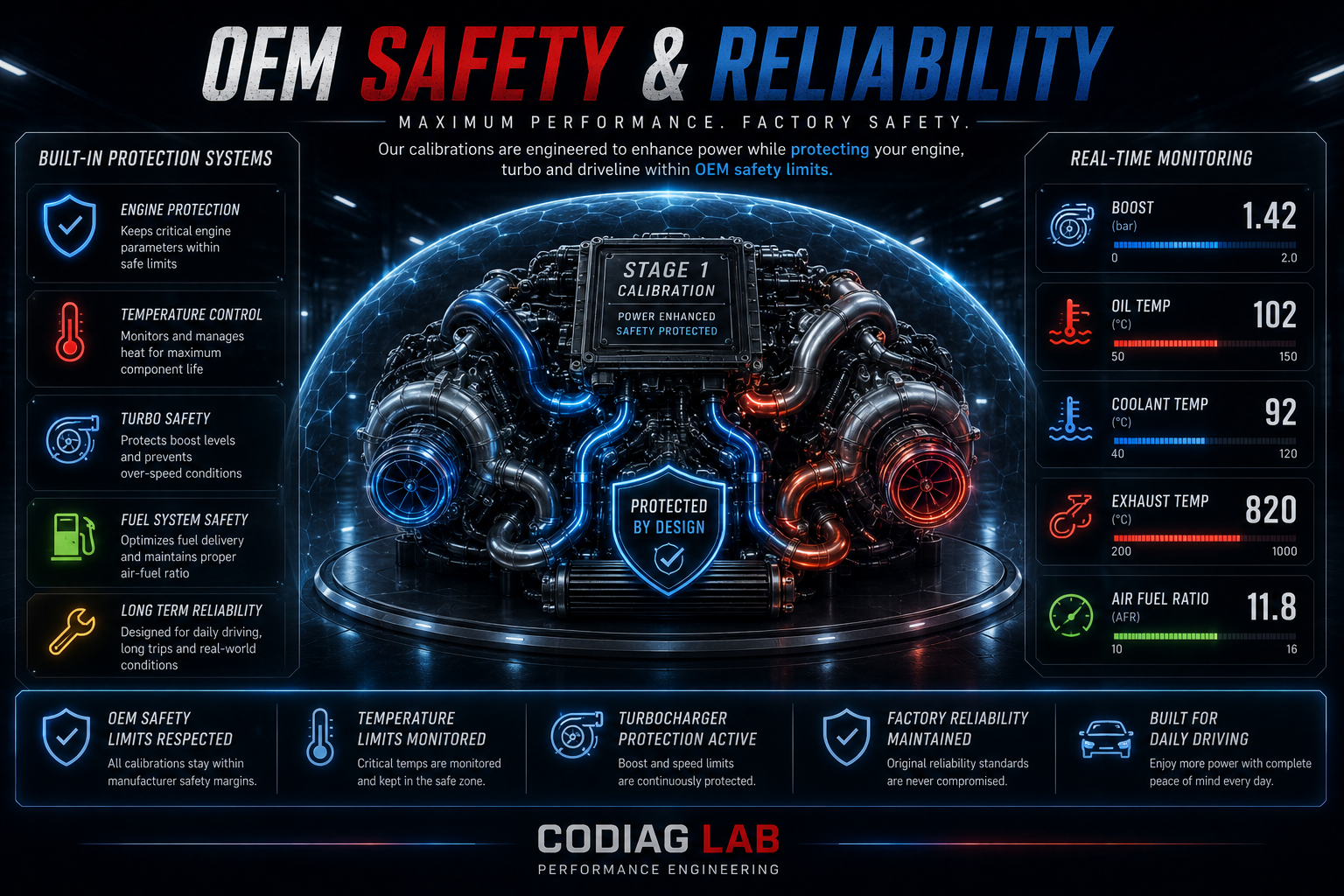
Clear answers before booking. The goal is more performance, better response and a calibration that still makes sense for daily driving.
When performed correctly on a healthy vehicle, Stage 1 is generally the safest and most popular level of ECU performance optimization. It keeps the vehicle mechanically stock while improving selected software maps.
No. Stage 1 is designed for standard factory hardware. If upgraded hardware is installed, a different calibration level may be required.
Yes. The original ECU file is backed up before modification whenever the programming method and ECU platform allow it.
Fuel consumption depends mainly on driving style. Under normal driving, stronger torque can sometimes improve efficiency. Under full acceleration, the engine uses more fuel because it produces more power.
Yes. Turbo diesel engines often respond very well to Stage 1 calibration because the mid-range torque can be improved significantly.
Yes. Turbo petrol engines can gain stronger top-end power, sharper response and improved boost behavior when calibrated correctly.
Most Stage 1 projects take a few hours depending on ECU type, read/write method, diagnostics and software availability.
Send the brand, model, year, engine, current power output if known, transmission type and a short description of what you want to improve. VIN or registration data can help identify the correct platform.
Stage 1 is a tuning variant, not a separate platform service.
Upload the original file and vehicle details for digital processing.
Order file serviceSend the physical control unit to Codiag Lab for supported tuning work.
Order mail-in tuningBring the vehicle to our Bremerhaven workshop for local assessment and programming.
Contact the workshopSend your vehicle details and we will review the available Stage 1 tuning options, expected gains and the safest calibration strategy for your engine.