Tuning — File Service
Submit the original TCU file and required details digitally.
Order file service
Faster shifts, smarter gearbox logic and a more connected driving experience.
The Transmission Control Unit, often called the TCU, is the electronic control module responsible for the behavior of modern automatic, dual-clutch and performance transmissions. It decides when the gearbox shifts, how quickly the next gear engages, how much torque is allowed during acceleration and how the transmission reacts in comfort, sport and manual modes.
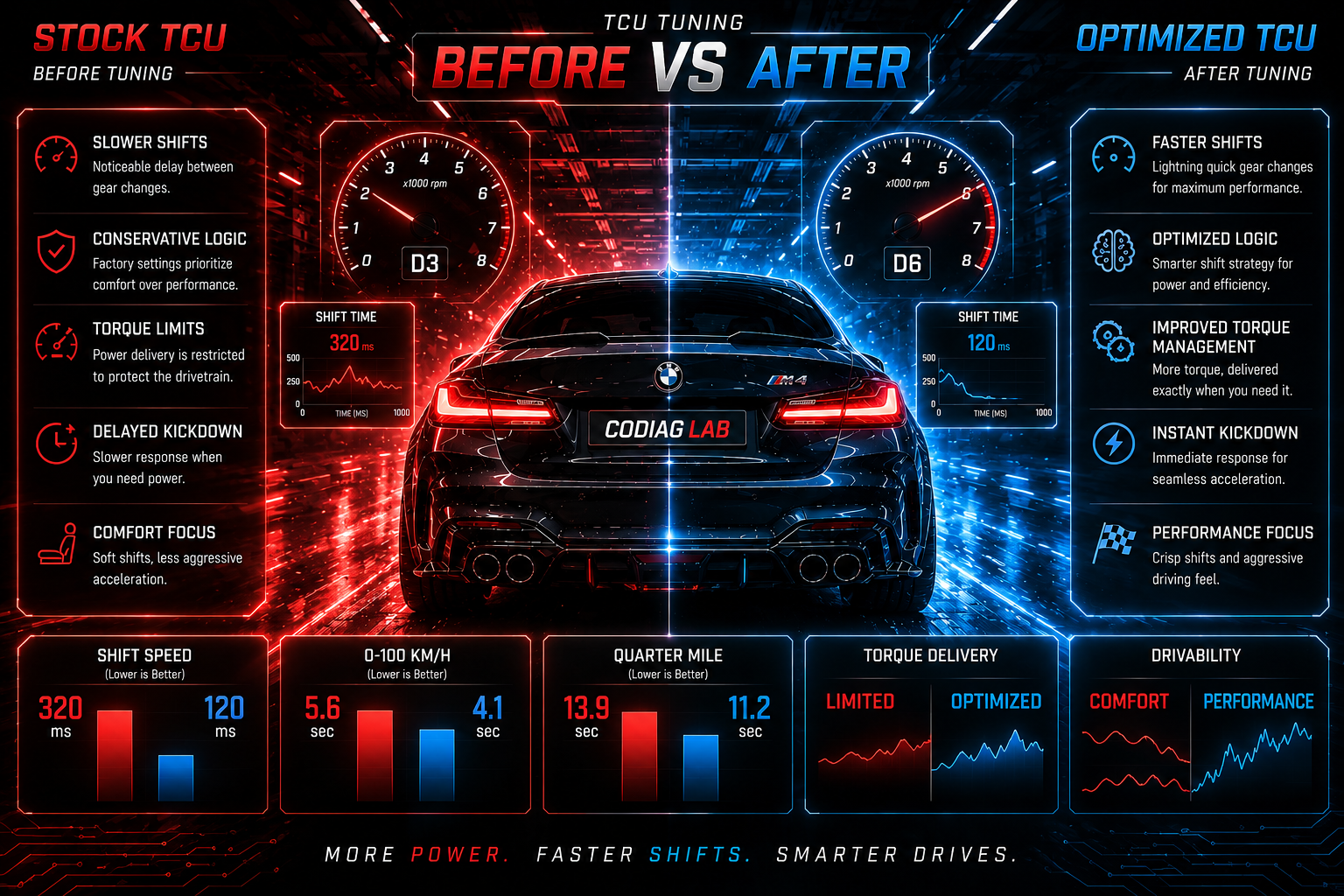
Factory transmission software is designed for a very wide range of drivers, countries, climates and driving styles. Because of that, many vehicles are calibrated with conservative shift behavior, delayed kickdown response and safety margins that prioritize universal comfort over performance feeling.
Professional TCU tuning optimizes the gearbox software to make the transmission feel more intelligent, more responsive and better matched to the engine’s power delivery. The result is not only faster shifts, but a gearbox that reacts with more confidence and precision in real driving.
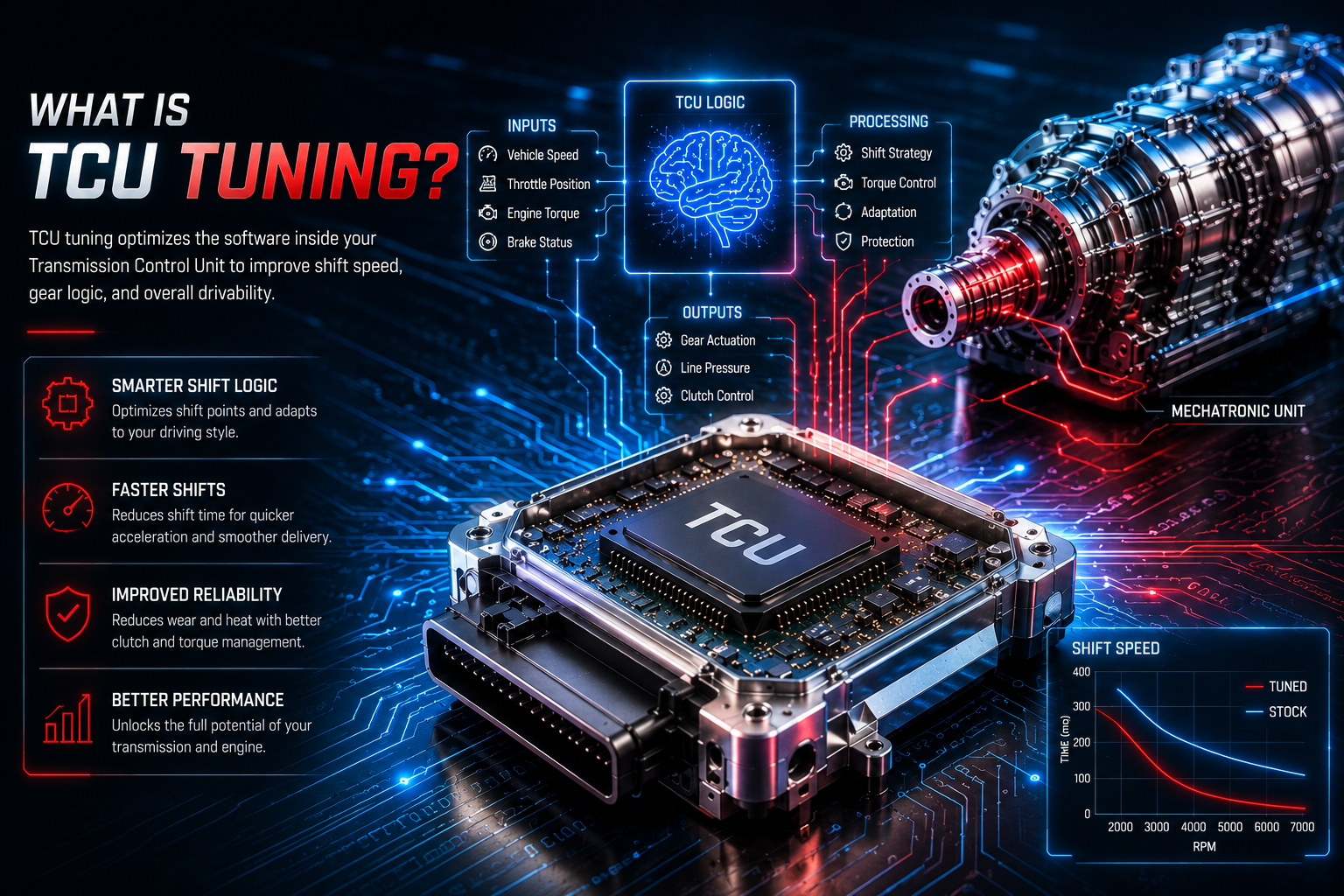
TCU tuning changes how the gearbox behaves under load, during kickdown, in manual mode and while accelerating. The difference is felt immediately because the transmission is the connection between engine power and the road.
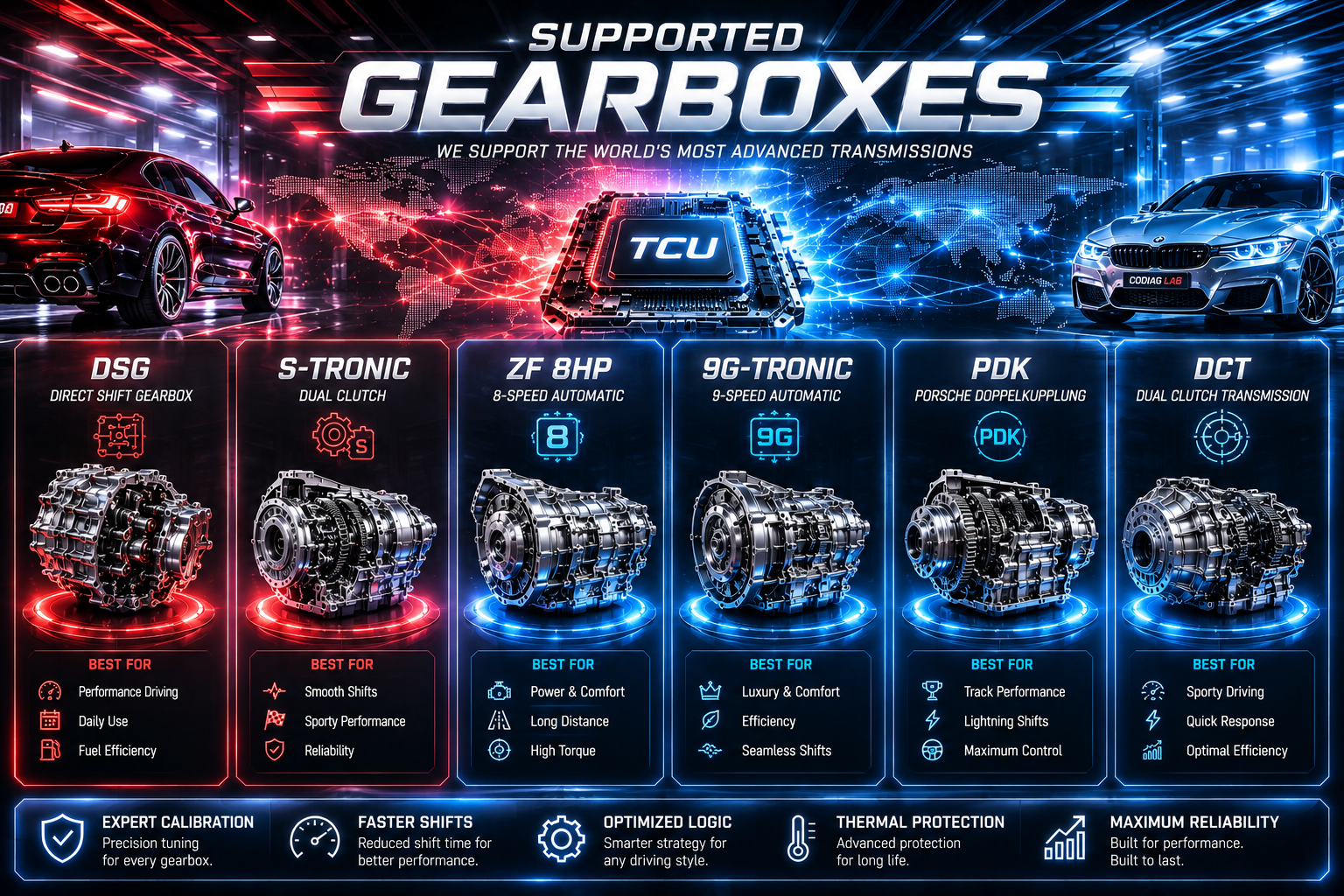
Different gearbox families require different calibration strategies. A DSG gearbox does not behave like a ZF8, and a 9G-Tronic does not respond like a PDK. The software logic, torque model and clutch strategy must be handled correctly for each platform.
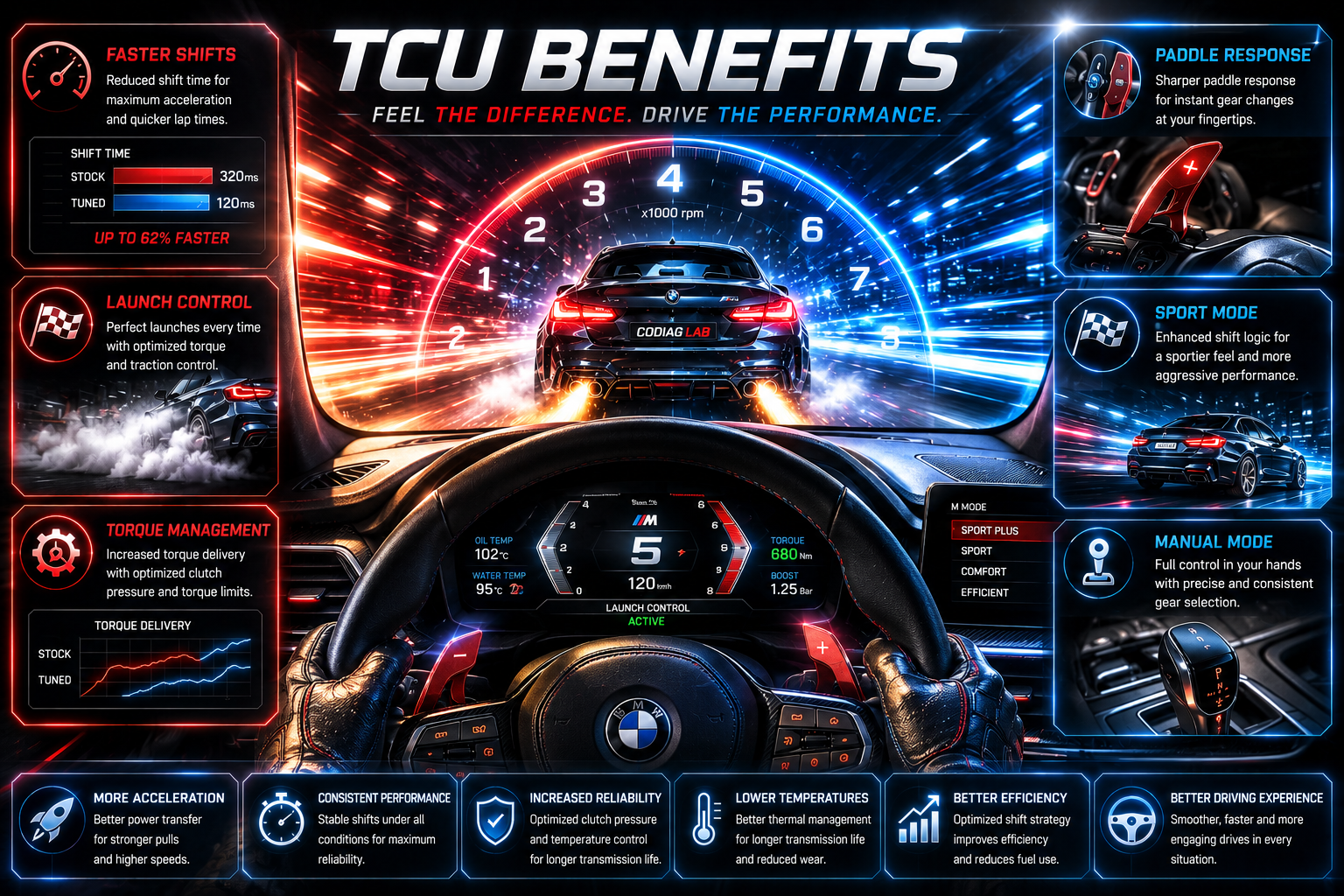
A well-developed TCU calibration improves the full driving experience. It can reduce shift hesitation, improve paddle response, make sport mode feel more purposeful and allow the transmission to work better with increased engine torque.
For daily driving, the gearbox feels more confident and predictable. During spirited driving, the vehicle feels more connected because the transmission reacts faster and holds the correct gear more intelligently. This is especially important on tuned vehicles, where the factory gearbox logic may not fully match the new torque curve.
TCU tuning is not just writing a file. A professional workflow protects the original software, evaluates the vehicle platform and applies calibration changes with the gearbox’s mechanical limits in mind.
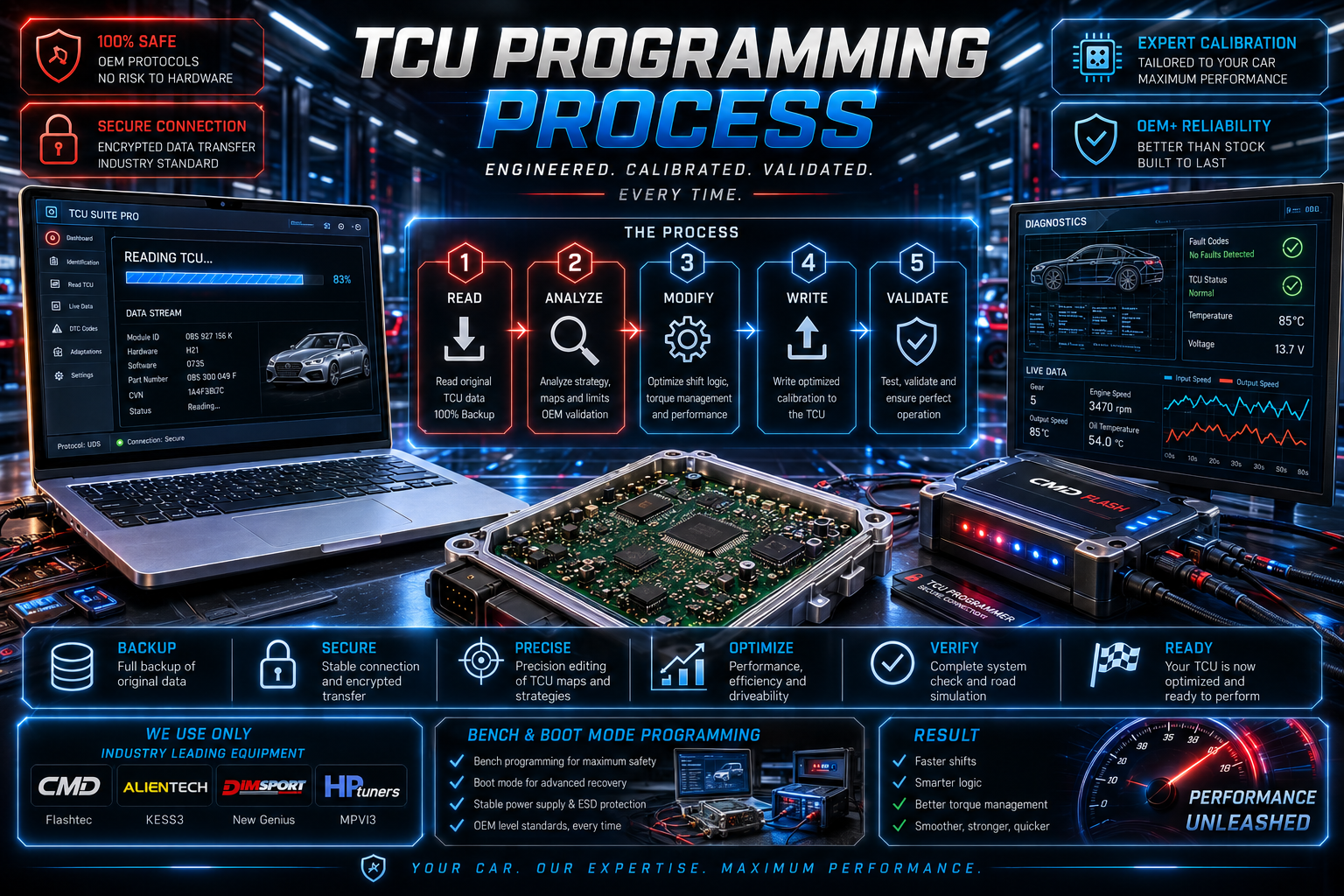
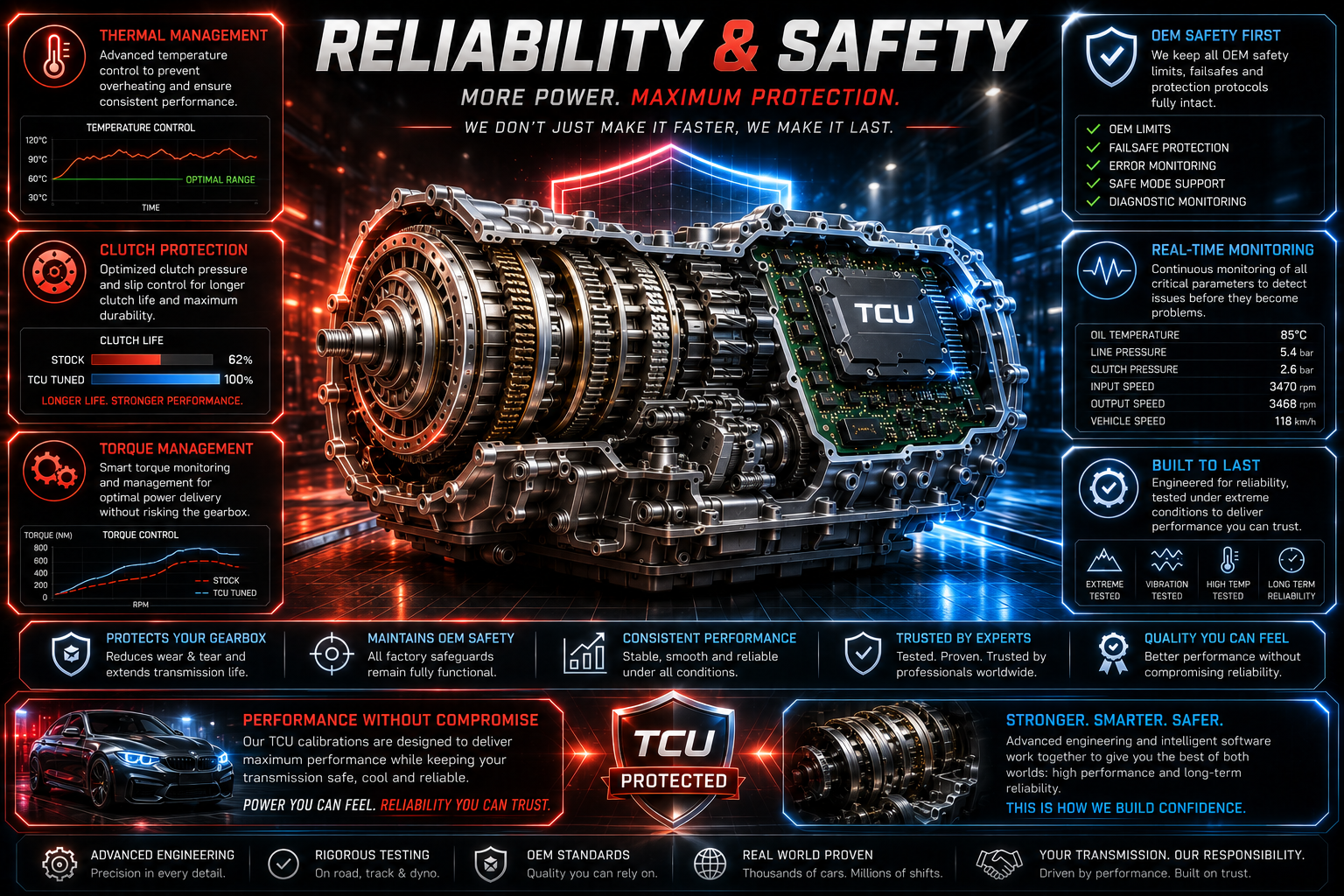
A transmission is one of the most expensive systems in the vehicle, so reliability must remain part of the calibration strategy. Professional TCU tuning should improve the driving experience without disabling the protection logic that keeps the gearbox safe under heat, load and repeated acceleration.
Temperature monitoring, clutch behavior, torque requests and diagnostic functions must be respected. This is especially important for dual-clutch gearboxes and high-torque diesel or turbo petrol engines, where aggressive torque delivery can create unnecessary stress if the gearbox software is not calibrated correctly.
Clear answers before booking. The goal is a gearbox that shifts faster, reacts smarter and still makes sense for daily driving.
Yes, when the calibration is developed correctly and the gearbox is mechanically healthy. Protection strategies such as temperature monitoring and diagnostic functions remain important parts of the system.
In most cases, yes. The original file is backed up before modification whenever supported by the gearbox platform and programming method.
Damage risk depends on the condition of the gearbox, torque level and calibration quality. A professional tune respects torque limits, clutch behavior and thermal protection instead of simply increasing every value.
Yes. On many tuned vehicles, TCU calibration is the missing step because the gearbox must correctly handle the increased torque and changed engine response.
Most projects take a few hours depending on gearbox type, programming method and software availability. Some platforms require deeper analysis or additional checks.
Yes. Shift speed, clutch pressure strategy and shift logic can often be optimized, especially on DSG, DCT and performance automatic gearboxes.
Sport mode can be calibrated to hold gears more intelligently, react faster and match the vehicle’s torque curve better, creating a more dynamic driving feel.
Send the vehicle brand, model, year, engine, transmission type if known, current power level and what you want to improve. The VIN or software ID can help identify the exact platform.
Submit the original TCU file and required details digitally.
Order file serviceSend the physical TCU to Codiag Lab for supported tuning work.
Order mail-in tuningArrange a local vehicle appointment at our Bremerhaven workshop.
Contact the workshopSend your vehicle details and we will review the available TCU tuning options, gearbox platform and the safest calibration strategy for your car.